What is kinematic viscosity?
The kinematic viscosity [m2/s] is the ratio between the dynamic viscosity [Pa.s = 1 kg/m·s] and the density of a fluid [kg/m3].
The SI unit of the kinematic viscosity is m2/s. Other units are: 1 St (Stoke) = 1 cm2/s = 10−4 m2/s. 1 cSt (centiStoke) = 1 mm2/s = 10−6m2/s.
Water at 20 °C has a kinematic viscosity of about 1 cSt.
One way is to measure a fluid’s resistance to flow when an external force is applied. This is dynamic viscosity.
The other way is to measure the resistive flow of a fluid under the weight of gravity. The result is kinematic viscosity.
Put another way, kinematic viscosity is the measure of a fluid’s inherent resistance to flow when no external force, except gravity, is acting on it.
How does viscosity affect liquid flow meter selection?
Viscosity is one of the most important parameters when selecting a liquid flow meter. Depending on the viscosity of your liquid, different flow measurement technologies may provide better performance and accuracy.
Engineers typically consider:
- Liquid viscosity (cSt)
- Flow range
- Pressure drop
- Required accuracy
- Process temperature
- Fluid conductivity
Measuring Kinematic Viscosity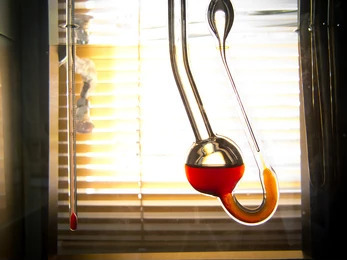
There are several ways to find the kinematic viscosity of a fluid, but the most common method is determining the time it takes a fluid to flow through a capillary tube. The time is converted directly to kinematic viscosity using a calibration constant provided for the specific tube.
The unit of measure of kinematic viscosity is Centistokes (cSt).
A basic difference between the dynamic and kinematic viscosity measurements is density.
Density actually provides a way to convert between a kinematic and a dynamic viscosity measurement. The formula for the conversion is:
- Kinematic (cSt) x Density = Dynamic (cP)
- Dynamic (cP) / Density = Kinematic (cSt)
For a given sample, with a density greater than one, dynamic viscosity will always be the higher number.
Need a Refresher on Density?
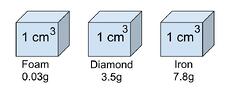
Density is the ratio of the mass (or weight) of the sample divided by the volume of the sample. Think about an ice cube and a cube of steel. They may be the same size, but the steel cube weighs more than the ice cube. Therefore, we say that steel has a greater density than ice cube.
The mass (or weight) of a fluid is determined by gravity. In the kinematic measuring method, gravity is the only force that acts on the sample.
Different viscosities for Vortex Flow Meters
The LIQUI-VIEW Base series operate on the vortex principle.
The obstruction (bluff body) placed in the flow of the liquid sheds vortices downstream at a frequency proportional to the velocity of the liquid.
A piezoelectric sensor detects the vortices and creates electrical pulses which are proportional to the liquid flow rate.
LIQUI-VIEW Base provides the output either with pulse output or analog output (4-20 mA).
The LIQUI-VIEW instruments are able to work up to 1.8 cSt with an accuracy of <2%RD
With a viscosity of 1.8 - 4cSt the measuring accuracy is 3%FS, between 4 - 14 cSt the accuracy will be around 4% FS.
| Liquid | Kinematic Viscosity (cSt) |
|---|---|
Water | 1 |
Honey | 2000-10000 |
| Blood | 2-9 |
Olive oil | 30-60 |
| Mayonnaise | 6250-28000 |
* Viscosity changes with temperature, cSt above is average viscosity
Related engineering resources
> Liquid Vortex Flow Meter
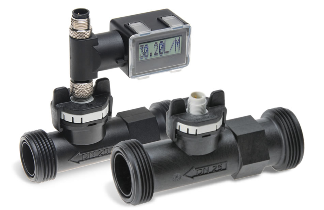 Flow range 0.5 l/min up to 150 l/min
- Output Analog (4..20mA) or Frequency output
- Display Local display showing current flow rate
- Low pressure drop
- Maintenance free no moving parts
- Pressure 12 bar pressure rating
- Compact, light-weight, cost-effective construction